

A service commitment is only as meaningful as the evidence behind it. Understanding what a service level agreement (SLA) is begins with its purpose: it documents the service a provider will deliver, the performance standards that apply, each party’s responsibilities, and the measures used to assess delivery. It turns expectations into defined commitments, giving both parties a clearer basis for monitoring performance and addressing gaps.
That clarity matters because a headline target, such as uptime or response time, can leave important questions unanswered: how is performance measured, which exclusions apply, and what happens if a commitment is missed? A useful SLA defines these points in terms that can be checked against service records, rather than relying on broad assurances.
This article explains the core terms and measures an SLA may contain, how to assess whether its commitments are verifiable, and where cloud service providers may allow room for negotiation. It also distinguishes an SLA from related performance measures, helping you assess not only what has been promised but how the agreement makes that promise accountable.
Key Takeaways
- Identify the service, responsibilities, and performance commitments an agreement actually covers before assessing its value.
- Look for measurable targets, clear monitoring methods, and defined remedies when commitments are missed.
- Assess whether reported performance can be matched to the agreed measurement window, exclusions, and service records.
- In cloud agreements, focus negotiations on the terms that shape accountability, including scope, reporting, and review provisions.
Is there room for negotiation on SLAs with cloud service providers?
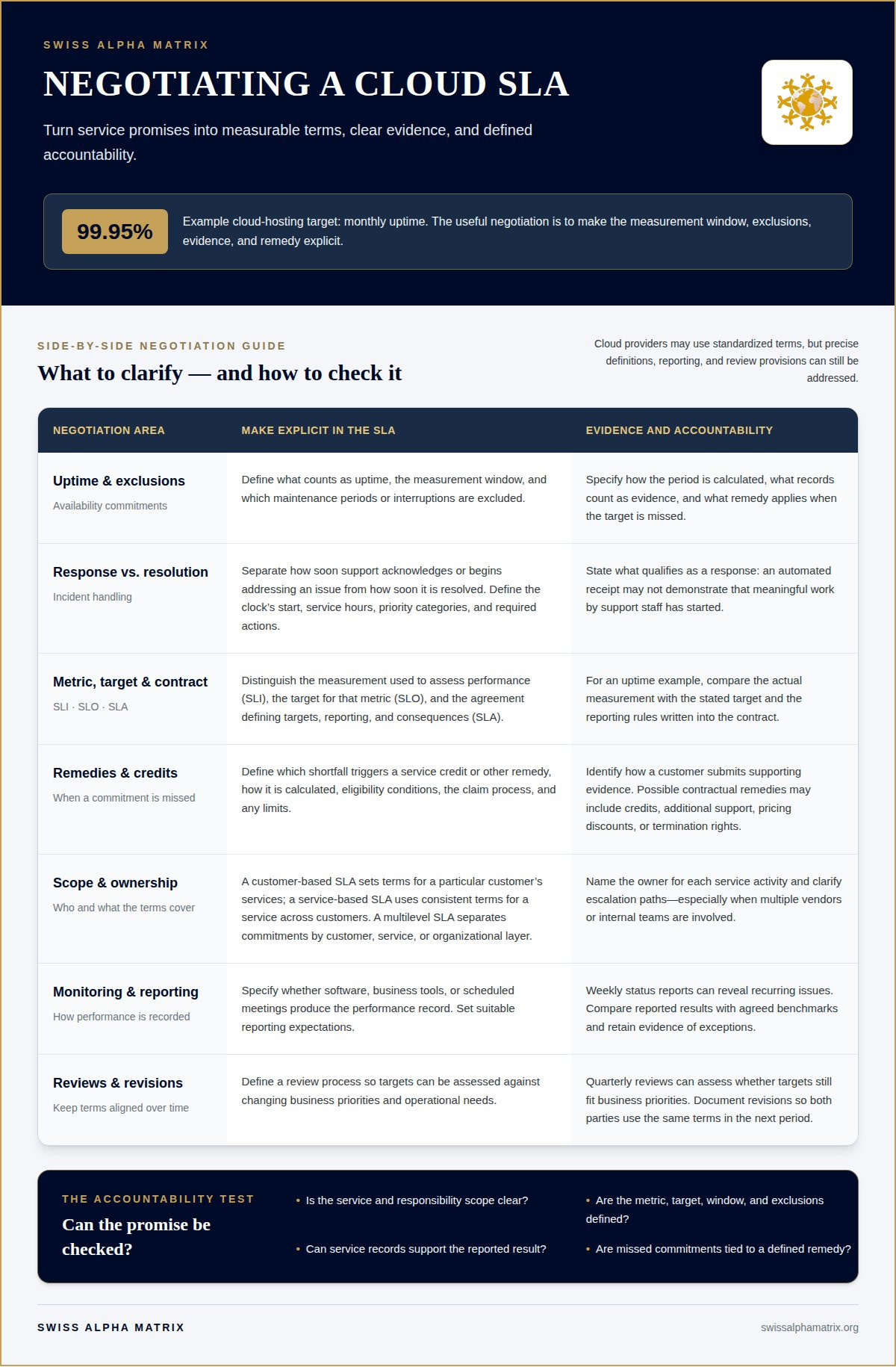
Yes, although the scope depends on the provider’s service model and the terms involved. Negotiation can clarify what counts as uptime, which maintenance periods are excluded, how performance is measured, and what remedy applies if a commitment is missed. These distinctions matter: an automated receipt may count as an incident response unless the contract defines response as meaningful action by support staff.
An SLA is a documented commitment between a customer and a service provider. A service-level objective (SLO) is a target for a specific metric within that agreement, while a service-level indicator (SLI) is the measurement used to assess actual performance. For example, uptime could be the SLI, a stated uptime target the SLO, and the SLA the contract defining the target, reporting, and consequences.
The agreement’s structure also shapes negotiation. A customer-based SLA sets terms for a particular customer’s services, while a service-based SLA applies the same terms to a service offered across customers. A multilevel SLA separates commitments by customer, service, or organizational layer. When several vendors or internal teams are involved, clear ownership and escalation paths help prevent gaps in service responsibilities.
Cloud providers may offer standardized terms, but customers can seek precise definitions, suitable reporting, and a review process. A cloud-hosting example might state 99.95% monthly uptime; the useful negotiation is whether the measurement window, exclusions, evidence, and remedy are explicit. Match the requested commitment to operational needs, since tighter targets may affect the provider’s offer and willingness to respond.
Build monitoring into the agreement rather than leaving it as an informal practice. Specify whether software, business tools, or scheduled meetings produce the performance record. Weekly status reports can reveal recurring service issues, while quarterly reviews can assess whether targets still match business priorities. Compare reported results with agreed benchmarks, retain evidence of exceptions, and document revisions so each party uses the same terms in the next period.
Core SLA components
A well-structured SLA connects service expectations to measurable performance and defined consequences. Its components should make every commitment assessable throughout the contract period.
Typical SLA Contents
An SLA records the parties, covered services, performance metrics, responsibilities, exclusions, reporting, review dates, and cancellation conditions. These terms define the service scope and establish what evidence can demonstrate delivery. For example, an availability commitment should specify its measurement period and how planned maintenance is treated, rather than leaving those conditions implicit.
Other components may include service credits, escalation contacts, disaster recovery procedures, and customer obligations such as payment frequency. A service-based SLA applies consistent terms to a service offered across customers; a customer-based SLA can reflect an individual relationship. In either structure, identify who owns each service activity and how performance reports reach the parties involved.
Response and Resolution Times
Response time measures how soon the provider acknowledges or begins addressing a reported issue; resolution time measures how soon the issue is resolved. The distinction matters because an automated receipt may satisfy a loosely defined response metric without showing that substantive work has started.
Define the clock’s start point, applicable service hours, priority categories, and required actions. For instance, an SLA might set a maximum response time of two seconds for a system metric, or require support to respond within 24 hours. These are examples, not universal targets. Separate response from resolution, since complex incidents may require investigation beyond initial acknowledgement.
Credits, Penalties, and Remedies
Credits and other remedies specify what happens when measured performance falls below an agreed target. Their value depends on whether the contract explains the calculation basis, eligibility conditions, claim process, and any limits.
For example, service credits may be deducted from amounts owed under the service-level contract. The agreement should state which availability shortfall triggers a credit and whether the amount depends on the size of the breach. It can also define additional support, pricing discounts, or termination rights as remedies. Distinguish these contractual outcomes from penalties, and specify whether customers must submit evidence through a defined process.
Exclusions and measurement rules complete the structure: a 99.5% uptime target over 30 days corresponds to 3.6 hours of downtime. The contract must specify how that period is calculated, which interruptions count, and how monitoring records are reviewed. Clear definitions let both parties assess performance against the same metrics.
SLA definition and purpose
Organizations often ask, “What is a service level agreement (SLA)?” It is a documented arrangement that defines service expectations, responsibilities, and measures between a provider and customer, or between teams within one organization. It gives the parties a shared basis for managing service delivery and assessing whether they are meeting agreed commitments.
The Meaning of an SLA
Understanding what a service level agreement (SLA) is clarifies how it differs from a general service description: an SLA records the standards and responsibilities that govern the working relationship. Written measures give the parties a reference for reviewing performance and resolving disagreements.
For example, a cloud agreement can define availability, reporting procedures, and responses when service falls below its target. The customer can assess delivery against those terms instead of relying on informal assurances. The document’s length may vary, but its practical purpose is to make expectations and accountability clear to everyone involved.
Service Scope and Stakeholder Obligations
Service scope identifies the work covered, while stakeholder obligations set out the actions each party must take. This distinction helps an organization separate provider duties from customer responsibilities, such as supplying information or making scheduled payments.
For a hosted application, the agreement might define which applications are included, when maintenance occurs, and who receives incident reports. It should also identify the operational contacts responsible for escalation and service reporting. If departments depend on one another, an operational-level agreement can clarify the internal responsibilities that support the broader SLA.
These definitions establish the boundaries of the relationship. A service description can cover technologies, processes, turnaround expectations, and exclusions, while review schedules provide an opportunity to reassess whether the service still meets business needs. Changed operating requirements, for example, may call for revised measures or a different reporting process.
The agreement can also set out consequences for unmet commitments, including service credits, termination conditions, or other stated remedies. Clear wording matters: the parties need to understand which performance failure activates a remedy and what evidence supports its calculation. This makes the SLA a practical reference for managing service delivery, not merely a statement of intent.
Verifying service levels and deliverables
Verification connects recorded performance to the SLA’s commitments. It tests whether the service was delivered as defined and whether the evidence supports each reported result.
Provider Failures and SLA Outcomes
A provider failure occurs when measured delivery falls below an agreed service level. The consequence depends on the contract: it may provide service credits, a refund, additional support, or a right to terminate. A remedy is useful only when the triggering breach and claim process are clear.
Compare the provider’s records with the SLA’s measurement window, exclusions, and reporting rules. For an ecommerce operation that needs continuous access, a 99.999% uptime requirement equates to about five and a quarter minutes of downtime per year. If the provider reports a breach, parties can use incident logs and monitoring data to assess its scale and impact.
Reviewing an SLA Before Signing
Reviewing an SLA means assessing its scope, measures, exclusions, evidence, and remedies before accepting the contract. This helps determine whether the provider’s commitment matches operational needs and whether performance can be verified.
Confirm which services and departments are covered, how SLA metrics are calculated, and who reports the results. Check whether planned maintenance or third-party dependencies affect measurement. Then assess response and resolution terms, the process for claiming credits, and whether consistent failures permit termination. For internal services, clarify which team owns each deliverable and where escalation begins.
Once service delivery begins, compare reported results with independent operational records where available. Check whether incidents are counted consistently, whether resolution means service has been restored, and whether exclusions explain differences between provider reports and observed outcomes. Recurring variances can point to unclear definitions, gaps between teams, or a metric that does not capture the service actually received.
For complex operations, arrange an independent review of service evidence to assess whether documented deliverables align with agreed commitments and operational records.
Swiss Alpha Matrix: On-Ground Verification Services
Swiss Alpha Matrix supports stakeholders when SLA commitments depend on evidence beyond a provider’s performance reports. Its On-Ground Verification Services and Operational Due Diligence help assess operational conditions and reported deliverables in complex, cross-border programmes. Audit-Grade Instrument Validation supports financial instrument validation, while Complex Project Management helps coordinate demanding programmes involving multiple parties and workstreams.
This support is most relevant when service delivery depends on real-world operations, documentation, or coordination that requires independent scrutiny. It complements an SLA review by examining the operational evidence behind stated commitments, rather than treating contract metrics as the only measure of performance.
Contact Swiss Alpha Matrix to discuss verification needs for your programme.
Make service commitments part of stronger oversight
Knowing what a service level agreement (SLA) is provides a foundation; the next step is to connect its commitments to the operational evidence used in decision-making. Consider how service performance affects wider programmes, counterparties, and capital exposure, then determine whether independent assessment would bring greater clarity to the arrangements.
Swiss Alpha Matrix offers Audit-Grade Instrument Validation, On-Ground Verification Services, and Complex Project Management. These capabilities support stakeholders assessing instruments, verifying on-the-ground conditions, or coordinating demanding workstreams where documented commitments meet operational realities.
For organisations reviewing a complex programme, a measured assessment can help bring evidence and oversight into sharper focus. Contact Swiss Alpha Matrix to discuss your verification and project management requirements, and consider the next step with confidence.
Frequently Asked Questions
What is an SLA (service level agreement)?
An SLA is a documented agreement that sets service expectations and responsibilities between a provider and customer, or between teams in one organization. It translates a broad service arrangement into commitments that can be assessed. For example, an internal technology team and a business department can use an SLA to clarify which support activities are covered and how service performance is reported.
What SLA metrics should businesses consider?
Choose metrics that reflect the service’s operational importance, such as availability, response or resolution time, error rates, technical quality, security, or business results. A payment platform might track successful transaction processing, while a support function might measure how quickly priority issues are acknowledged. Define the measurement method and reporting source for each metric so the result reflects actual service performance, not an ambiguous label.
What are the key components of an SLA?
Key components include the parties and service scope, performance measures, responsibilities, reporting arrangements, exclusions, review procedures, and remedies. These components must work together: a target without a measurement method is difficult to assess, while a remedy without a defined trigger is difficult to apply. For services spanning several departments, clarify ownership, contact points, and escalation routes for handoffs.
Can I create joint SLAs shared among multiple vendors or service providers?
Yes. A multilevel SLA can address services involving multiple vendors, internal teams, or customer plans. A shared agreement should make dependencies visible by assigning each provider’s deliverables, handoff points, reporting duties, and escalation responsibilities. For example, if one vendor hosts an application and another supports its network, the agreement should specify which party reports each performance measure and handles each incident stage.
If I opt for outcome-based pricing with an IT outsourcer, do I still need SLAs?
Yes, an SLA can define how the contracted outcome is measured and which service responsibilities support it. Outcome-based payment alone may not clarify attribution when results depend on customer inputs, third-party systems, or operating conditions. Specify the evidence used to assess outcomes, the provider’s obligations, relevant exclusions, and how the parties address a shortfall. This makes performance evaluation more consistent.
What are best practices for creating an effective SLA?
Start by defining the service scope and business outcome, then select measurable targets that reflect operational priorities. Assign responsibilities to named roles, establish a monitoring and reporting method, and state how to handle exceptions and missed commitments. Agree on review points and an amendment process before service delivery begins. For example, distinguish planned maintenance from unplanned interruption in the measurement rules.