

Project management problems rarely begin with one dramatic failure. More often, unclear expectations, unapproved changes, weak communication, and overstretched teams build up over time. Knowing how to avoid common project management pitfalls means addressing these conditions early: align stakeholders on goals, assess changes before approving them, and match responsibilities to available skills and resources.
A sound methodology and a well-written plan are not enough to keep a project on course. Delivery also depends on timely decisions, informed stakeholders, and realistic capacity. Establish those foundations, control scope changes, and give the team what it needs to work effectively. Uncertainty cannot be eliminated, but it can be built into planning and oversight so emerging issues are addressed before they threaten the project’s direction or delivery.
Key Takeaways
- Set clear project goals, responsibilities and communication rhythms so stakeholders understand decisions and can raise concerns in time.
- Assess proposed scope changes for their effects on timelines, budgets and resources before approving them.
- Match assignments to team members’ skills and availability, and address capacity gaps before they disrupt delivery.
- Use structured project oversight to identify emerging risks, clarify decisions and keep complex work aligned with its intended outcomes.
1. What is the Dark Side of Project Management?
A project can look orderly while small communication failures undermine delivery. Requirements shift in conversation, decisions go undocumented, and team members rely on different assumptions. For example, a sponsor may expect a reporting feature that the delivery team did not understand to be in scope. The result can be rework, missed deadlines, and declining confidence in the project.
No methodology prevents every failure. A strong approach links clear requirements to milestones, dependencies, and regular reviews. For stable work, a defined plan makes responsibilities and sequencing visible. When needs may change, planned review points allow adjustments without losing sight of objectives. A practical way to avoid common project management pitfalls is to match the method to the work and communicate decisions consistently.
Improve stakeholder communication by agreeing early on goals, expectations, decision owners, and update channels. Specify who receives each update, what context they need, and when they need it. A sponsor, for example, may need a concise decision brief, while team members need task-level changes. Invite feedback at relevant points instead of sending frequent messages without a clear purpose or next step.
Track progress against documented milestones, assigned tasks, dependencies, and deadlines. In regular team reviews, compare completed work with the plan, identify blocked tasks, and agree on the next action. A missed handoff, unresolved dependency, or repeated milestone slippage can signal a developing delay. Record each issue’s cause and owner so patterns become visible before they affect later work.
Watch for repeated missed milestones, conflicting reports, unresolved decisions, and work that no longer supports agreed objectives. Escalate when the team cannot resolve an issue within its authority or when the impact threatens scope, schedule, budget, or key dependencies. State the issue, its documented impact, and the decision required. This gives sponsors a clear basis for action and keeps silence from turning into project failure.
2. Engaging stakeholders
Start stakeholder engagement by identifying who can shape, support, use, or be affected by the work. Customers, employees, investors, suppliers, communities, and government bodies may have different interests. Map their influence, concerns, and decision rights during planning. A supplier may control a critical handoff, for example, while employees need to adopt a new process. Overlooking either group can leave important expectations unaddressed.
Agree on intended outcomes with key stakeholders before delivery begins. Turn broad ambitions into measurable objectives, then clarify what success means to each group. If a change programme affects daily operations, involve employees in discussing likely impacts and practical constraints. Early engagement can reveal resistance while plans can still adapt, rather than after implementation problems arise.
Make feedback purposeful rather than simply collecting it. Use focused workshops, decision reviews, or targeted conversations to understand concerns and identify actions. Record each issue, its owner, and the response or decision needed. For example, assess a customer’s usability concern against agreed objectives, then respond with a clear rationale. This keeps stakeholders aligned without suggesting that every request must be accepted.
Plan updates around stakeholder needs and project events. A decision-maker may need an exception or approval brief; an operational team may need notice of a changed handoff. Set out the audience, channel, timing, and subject for each update, then revise the plan when priorities shift. Engagement doesn’t mean constant messages. It means relevant information reaches the right people in time to inform decisions. These practices help prevent project management mistakes from compounding, and make emerging concerns easier to address. For complex work requiring coordinated stakeholder oversight, complex project management support can help structure engagement around decisions and delivery risks.
3. Managing scope creep through change approval
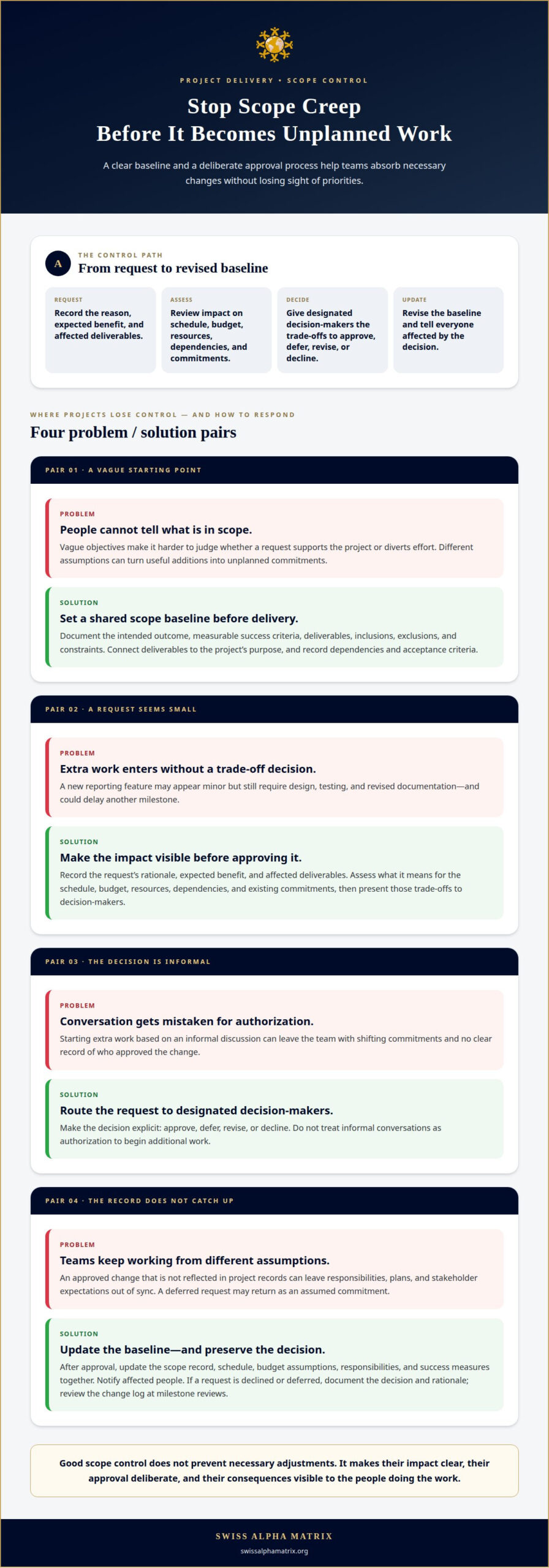
Scope creep starts when additional work enters a project without a corresponding decision about time, budget, or resources. A new reporting feature may seem small but require design, testing, and revised documentation. Reduce ambiguity by defining project goals and objectives before delivery. Document the intended outcome, measurable success criteria, deliverables, inclusions, exclusions, and constraints. This shared baseline gives sponsors and team members a clear reference when new requests arise.
A well-defined scope connects every deliverable to the project’s purpose. If the objective is to provide a reporting capability, specify who will use it and what information it must show. Record dependencies and acceptance criteria so the team can distinguish essential work from useful additions. Vague objectives make it harder to judge whether a proposed change supports project goals or diverts effort.
When a request arrives, record its rationale, expected benefit, and affected deliverables. Assess the implications for schedule, budget, resources, dependencies, and existing commitments. Adding a reporting feature, for example, may require technical work that delays another milestone. Present the trade-offs to designated decision-makers, who can approve, defer, revise, or decline the request. Do not treat informal conversations as authorization to start extra work.
After approval, update the scope record, schedule, budget assumptions, responsibilities, and success measures together. Notify affected team members and stakeholders so work follows the revised baseline. If a request is declined or deferred, document the decision and rationale to prevent it from returning as an assumed commitment. Review the change log at milestone reviews, when new information may warrant reconsideration. This discipline allows necessary adjustments while protecting priorities from unmanaged scope creep.
4. Providing teams with appropriate skills and resources
Start resource planning by translating project scope into the people, capabilities, tools, facilities, and time needed for delivery. Assign each task to a responsible team member, then compare its demands with that person’s skills and availability. A technical review assigned to someone without the necessary expertise can cause rework, even if the schedule looks adequate. Record resource constraints, dependencies, and ownership before work begins.
Realistic timelines and budgets come from estimating task durations, sequencing dependencies, and checking assumptions against previous projects. Consult experienced colleagues and team members who understand the work, then account for uncertainty: schedules may include 5–50% extra time, depending on the team’s familiarity with the project. Estimate costs from the required work and resources, and revise both schedule and budget when scope or capacity changes.
Prevent overload by reviewing each person’s active assignments, availability, and workload before allocating new tasks. If one specialist owns several critical activities, redistribute work or adjust sequencing before deadlines become unachievable. Regular capacity reviews make accountability practical: team members can raise constraints early, and project managers can reassign tasks, arrange training, or revise plans. Build capability without treating sustained overwork as a delivery strategy.
Choose project software based on the controls the work needs, not the number of features. Scheduling views can clarify milestones and dependencies; shared task records can show owners and progress; accessible project information can support coordination. Before adopting a tool, consider whether the team can use it effectively and whether it fits existing workflows. A tool people cannot operate reliably may create friction instead of improving oversight.
Review resource use alongside progress, risks, and upcoming deadlines, then adjust allocations when constraints threaten delivery. For complex programmes where capability, capital, and dependencies require coordinated oversight, engage complex project management support to structure resource planning around project needs.
Swiss Alpha Matrix: Complex Project Management
Swiss Alpha Matrix provides Complex Project Management for programmes where multiple stakeholders, dependencies, and delivery risks require coordinated oversight. It may be a suitable next step when a project crosses organisational or national boundaries, involves material operational complexity, or needs independent scrutiny alongside delivery management.
Depending on the programme, Audit-Grade Instrument Validation can support the assessment of financial instruments, while On-Ground Verification Services and Operational Due Diligence can provide further checks on relevant operational matters. These services complement disciplined project governance by helping decision-makers assess information and execution risks in complex initiatives.
For structured project oversight or verification, contact Swiss Alpha Matrix to discuss your requirements.
Make disciplined delivery part of the next project
Make sound project control a continuing practice, not just a response to a difficult assignment. Teams learning how to avoid common project management pitfalls can carry lessons forward through concise closeout reviews. Identify which decisions arrived late, where assumptions proved incomplete, and which constraints became visible only after delivery began. Use those observations to improve planning, governance, and resource assessment before approving the next initiative.
This approach also strengthens institutional memory. When teams document why changes were accepted, how risks were managed, and where capacity became constrained, future decisions can draw on evidence rather than recollection. Over time, those records help leaders distinguish recurring weaknesses from project-specific conditions and focus oversight where it matters most.
If a complex programme would benefit from structured oversight, contact Swiss Alpha Matrix to discuss your requirements. A deliberate next step can help your team approach future work with greater clarity and control.
Frequently Asked Questions
What is the Dark Side of Project Management?
Less visible organisational friction can undermine delivery despite formal plans. A team may report green status because no one wants to raise a concern, even as a critical dependency remains unresolved. The important distinction is between recorded progress and reliable evidence of progress. Independent challenge, candid reporting, and decisions based on current information help expose the gap.
What are the most common project management pitfalls?
Common pitfalls include unclear success measures, overlooked dependencies, delayed decisions, and optimistic assumptions about capacity. To understand how to avoid common project management pitfalls, test the plan against a realistic delivery scenario before work begins. Ask what would happen if a key approval arrived late or a specialist became unavailable, then identify who would decide how to respond.
How can project managers prevent scope creep?
Prevent scope drift by linking every proposed deliverable to an agreed project outcome and recording what completion means. A system upgrade might be judged by successful data transfer, for example, while optional interface refinements remain separate requests. This distinction helps teams determine whether new work is necessary to achieve the outcome or merely desirable, making trade-offs clear before committing effort.
What are the best ways to manage project risks early?
Identify risks by examining assumptions, dependencies, external conditions, and decisions that could delay delivery. For each material risk, record a trigger, an owner, and a response. If testing depends on a supplier’s output, a missed handoff could be the trigger, and resequencing work a possible response. Review the risk register when conditions change, not only at scheduled reporting points.
How do you assign roles and responsibilities clearly in a project?
Assign one accountable owner to each significant deliverable and clarify who contributes, approves, or provides specialist input. A finance lead might own the forecast, while the project manager coordinates assumptions and the sponsor approves material decisions. Record these distinctions in a shared responsibility document, then revisit them when personnel, dependencies, or decision authority changes.
How should project managers handle changing requirements?
Manage changing requirements with a controlled record that preserves the current approved version and the rationale for each revision. When a request arrives, assess whether it corrects a misunderstanding, responds to new evidence, or introduces a different objective. Document the decision and communicate the authoritative version to everyone affected, so parallel instructions do not send teams toward conflicting outcomes.